Business
Is AI Search Driving Traffic to Your SaaS? Here’s How to Find Out
Is AI search driving traffic to your saas


If your business is going through a dry spell and you haven’t made any significant progress with purchases on your website, it is time to create a sales page. The sales pages is a standalone page, not featured on the existing site, but still with the same domain name. It has one purpose: to help the leads’ conversion process by securing the sales for the services or products you are selling.
To better understand all concepts of a sales page, we’ve created a ready-to-use guide on everything you need to know about it, from explanation to tips and examples. Without further ado, let’s dive in.

In order to convert leads into customers, you need a page that will showcase your product or service in the best way possible, listing all benefits, instructions, reviews and anything else that might be informative and of high value for the potential buyer. To do so, you need to create a sales page that will not be featured on the website; instead, it will be a standalone page.
The most important thing you need to know about the sales page is that it needs to take the potential buyer through all the phases of the conversion funnel – bring awareness of the product/service, spark their interest, make them consider buying it, intentionally lead them to consider a purchase, and, finally, close the deal.
It is a rollercoaster of significant information, showing value, showing satisfied customers and a Call to Action that will convert the lead.
Very often, there is a misunderstanding when it comes to making a difference between a sales and landing page. Even though they are pretty similar, the end goal of both is different.
While the sole purpose of the sales page is to convert the lead and close the deal on the purchase, the landing page’s purpose can be to make the lead become a subscriber of the newsletter or register for a webinar. This means that the landing page can be created for all the reasons to get the lead’s attention without necessarily selling them your products/services.
The sales page can be a long-form or a short-form. Again, there are many discussions about whether the first or the second type is better for conversion. There is no straightforward answer here because both types have their target audience. Let’s see how they are structured and how they work.
The long-form sales page leaves you a lot of room to explain, inform, and convince the lead why they need to buy your product/service. Since they are lengthy in style, they can be easily SEO-optimised. They are best to use when you are promoting your offer to attract leads when your product is costly, complicated, or the target buyer is not aware of it.
The best things about long-form sales pages are:
Of course, there are also a few disadvantages.
To use the most potential of a long-form sales page, here are all the sections and elements it needs to have.
It should be larger than the rest of the titles and subtitles. Also, it must contain the main idea of why someone would end up there. A promising direction is to use the most relevant keyword related to the topic and put it into an attention-grabbing style.
It should follow the headline and explain and clarify the headline above. Another important thing is – position the headline and subheadline close to each other in the hero section of the page.
An image or a video of the product/service that you are selling should follow together with a CTA button.
In this section, you just need to explain your product or service in a short copy and why people should buy it. Let’s say about five to six sentences.
Again, you need a CTA button. You’ve shown your products/service visually, talked about it in short, now you offer people to buy it by strategically placing a CTA button in this section. It is intended to convert the leads that have already been convinced by what they’ve seen so far.
For those leads that need more convincing, you continue with a section full of trust signals – reviews of the product. These trust signals could also be represented by a list of publications that your product/service has been featured on.
The next section is the longer text that should be informative about the product or service. Those leads who are already quite intrigued by your product/service will pay close attention to what is written here. This section sparks the most interest and smoothes the lead’s way to the next phase of the funnel of conversion – the consideration phase.
The benefits of the product/service should be clearly, concisely, and explicitly described in this section. It is essential that you list the gains the potential buyers will get if they decide to buy what you are selling.
Yes, they are also a trust signal, but if you have testimonials by present and past customers, put them close to the bottom of the page. They are the real deal that is needed for closure and to push the lead into the penultimate phase of the funnel of conversion, where the intent to buy will be the strongest. If you have video testimonials, that would be even better for SEO optimisation.
To give the final blow, you need to plan a section where you will ask or show the lead will happen if they don’t get what you are offering them. You can explain what their loss will be and even throw a special offer at the end that will make the offer available only for a short period of time.

Yes, once more. Finally, give them one last CTA where they can buy the product/service.
Contrary to the long-form sales page, the short-form sales page aims to convert the lead very fast, without delving into lots of content. They are best for e-commerce businesses and lower-end products. Also, your short-form sales page will convert much better in cases when the leads are already familiar with your brand, the product/service you are offering is straightforward, low-cost, low-risk or low-commitment. And the advantages are:
Of course, there are disadvantages, too.
Start with a powerful headline that will present the top benefit of buying your product/service.
Show your product/service in the best way possible so that leads can visualise the said benefit.
Craft short sentences that will elevate every selling point you are trying to make.
The same as the long-form sales page, trust signals are an inevitable part. Use testimonials, reviews, or any other kind of evidence that shows how satisfied your past and present customers are.
You should put only one CTA on your short-form sales page, so use it wisely! Make it powerful and display it prominently.
Once you decide the type that will better perform for your business, you can hire an expert that will do the writing for you. Nevertheless, you still need to be on top of the process of creating the sales page, so it is right for you to know how the copy is crafted. For that purpose, here are the questions that must be answered so that you know how to create a sales page that will intrigue the lead, inform them and, eventually, convert them.
The first step is always knowing who you write for. Do you have a clearly specified profile of a client that your product/services are intended for? If not, you must solve this first. Do market research, find out who will benefit the most from what you are selling, and use the sales page copy to talk to their needs directly. And go a step further – find out what they love, hate, and struggle with. With all the info you have, offer them a solution.
You need to be straightforward – no confusing messages that will only turn the leads away. Headlines are best for that purpose – in a short and crisp sentence, you can intrigue the lead, offer them a solution and state the time in which you can do it.
Ex.
Get 10.000 qualifying leads more with our tailor-made SEO strategy in less than one month
Are you battling with low traffic, high acquisition costs, or poor conversions? If your SaaS is stuck with these issues, it’s time to get your own SEO Growth Partner to fix your problems.
The next thing you need to do is decide how you want to nurture the lead. What will you offer in their awareness, interest, consideration, and buying phase? You need to optimise every segment of it so that when they are passing through the process are encouraged to make a decision on the spot.
The CTA buttons are the ones that ask the potential buyer to make the decision now and complete the purchasing process. That is why they need to be very powerful. Take a look at the following ones:
Can you see yourself clicking on such a button? You probably can. On the other hand, examples as the following are pretty vague and unconvincing

It must be. Responsive designs must work perfectly for people considering buying your service/product on their tablets or smartphones. If they are not enjoying what they see, they won’t get to the end of the purchasing process.
The more you have, the better. Add photos, videos, illustrations, video testimonials, case studies with graphs and anything else that you can think of because, as the saying goes – one photo is worth a thousand words. The visuals have a convincing power that strengthens your statement and make it more real.
An offer without a guarantee is a lost cause. Regardless of how attractive your offer is, if you don’t guarantee to back it up, the lead will probably not convert. In fact, guarantees make potential customers feel safe and more trusting of your product/service.
You shouldn’t. They will be considered as distractions. Yes, they can do wonders for the bounce rate of the website, but stealing the leads’ focus from the end-goal – buying will lead them away from the sales page.
It is a great idea to add a FAQ covering any essentials about your product/service. The list can also be SEO-optimised and help you with rankings on SERP.
Learning the ins and outs of what is a sales page will help you create one that will promote your product/service to the target audience and collect qualifying leads. It can be further used to nurture the lead or used in other marketing campaigns to inform the leads of why they need to buy your product/service.
Book a free consultation today to learn how we can help you attract more of the right traffic and turn it into qualified leads for steady growth.





Results

Results

Results

Results





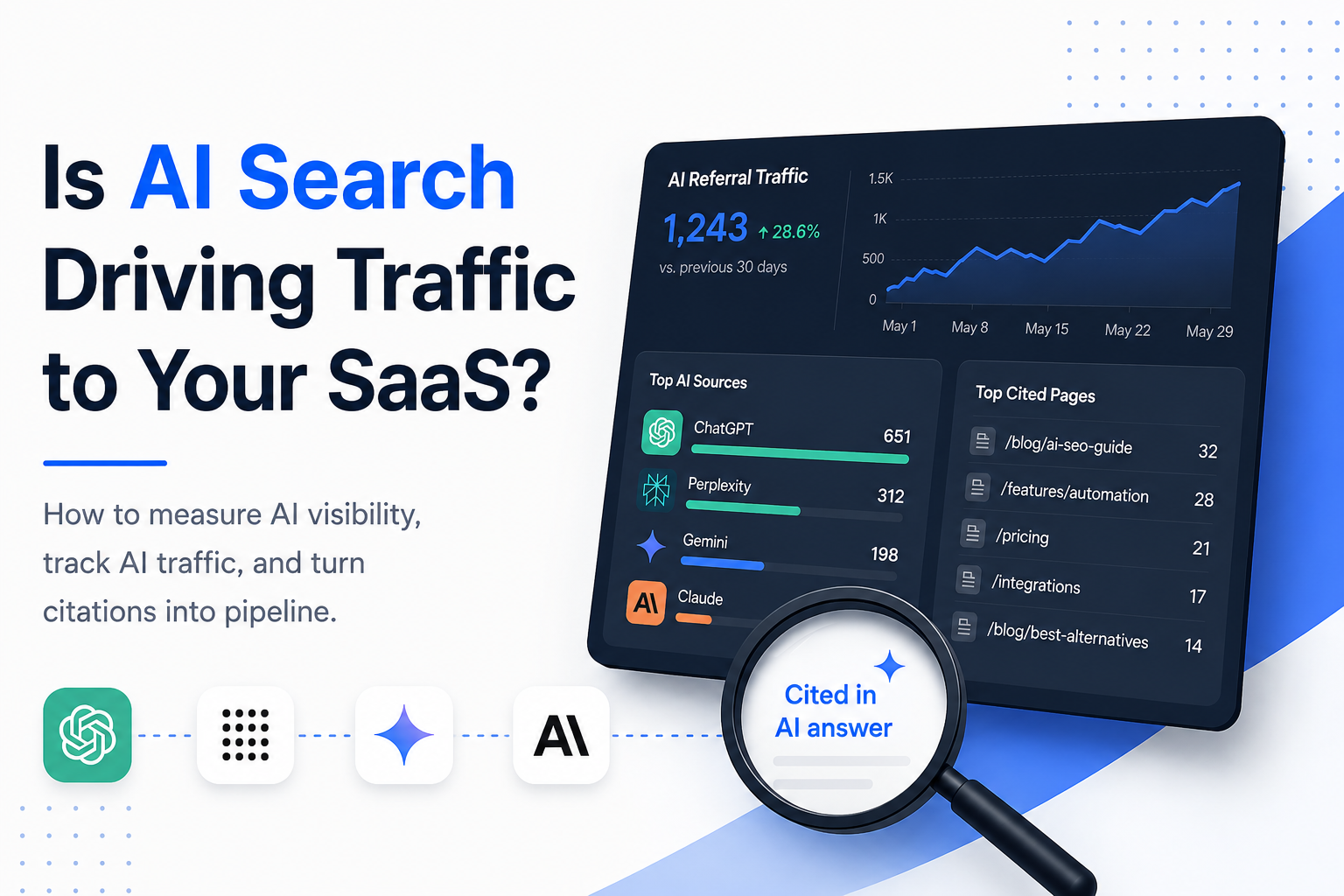
Is AI search driving traffic to your saas
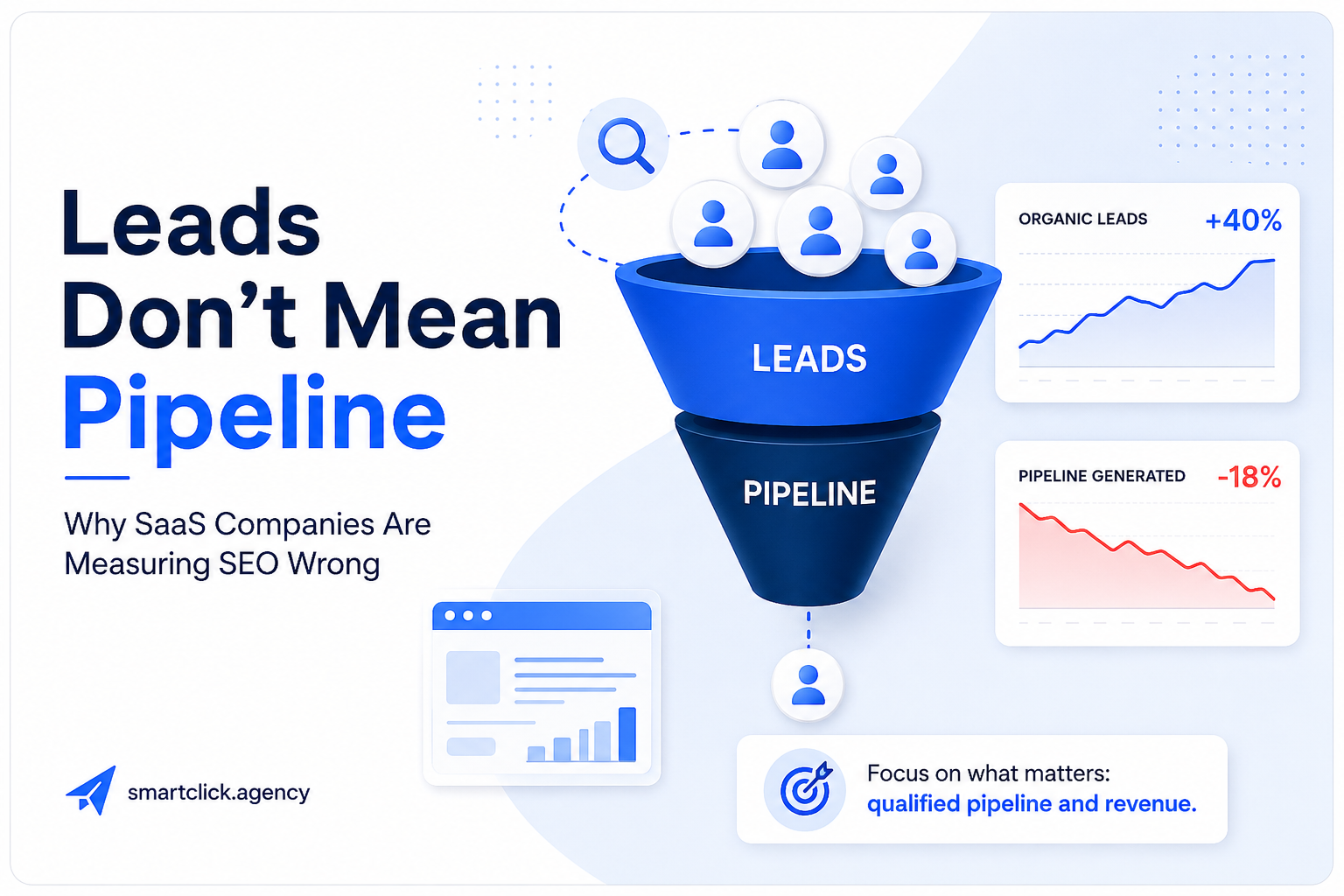
More leads don’t translate into more pipeline
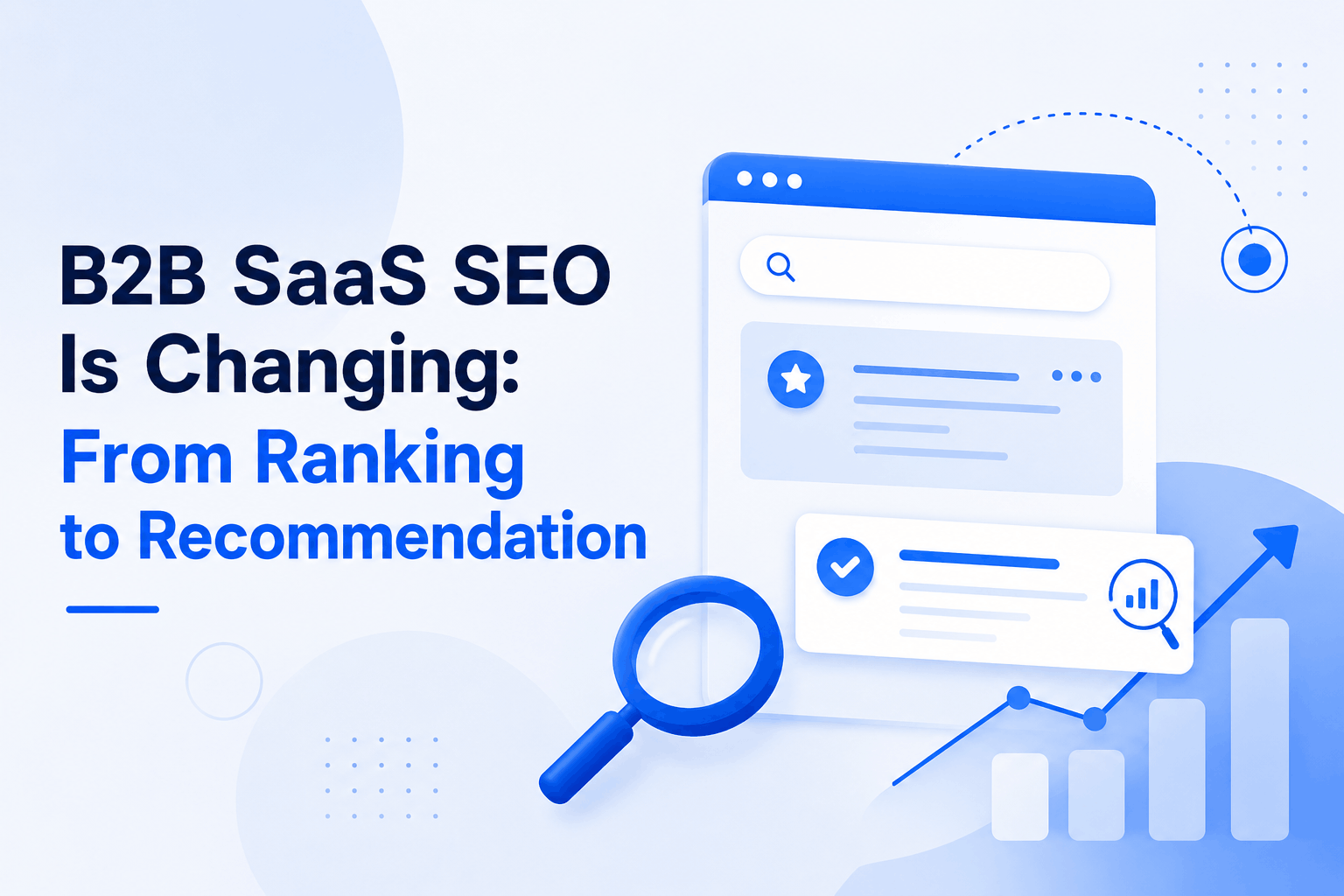
From Ranking to Recommendation
Don’t let your competitors take the lead!